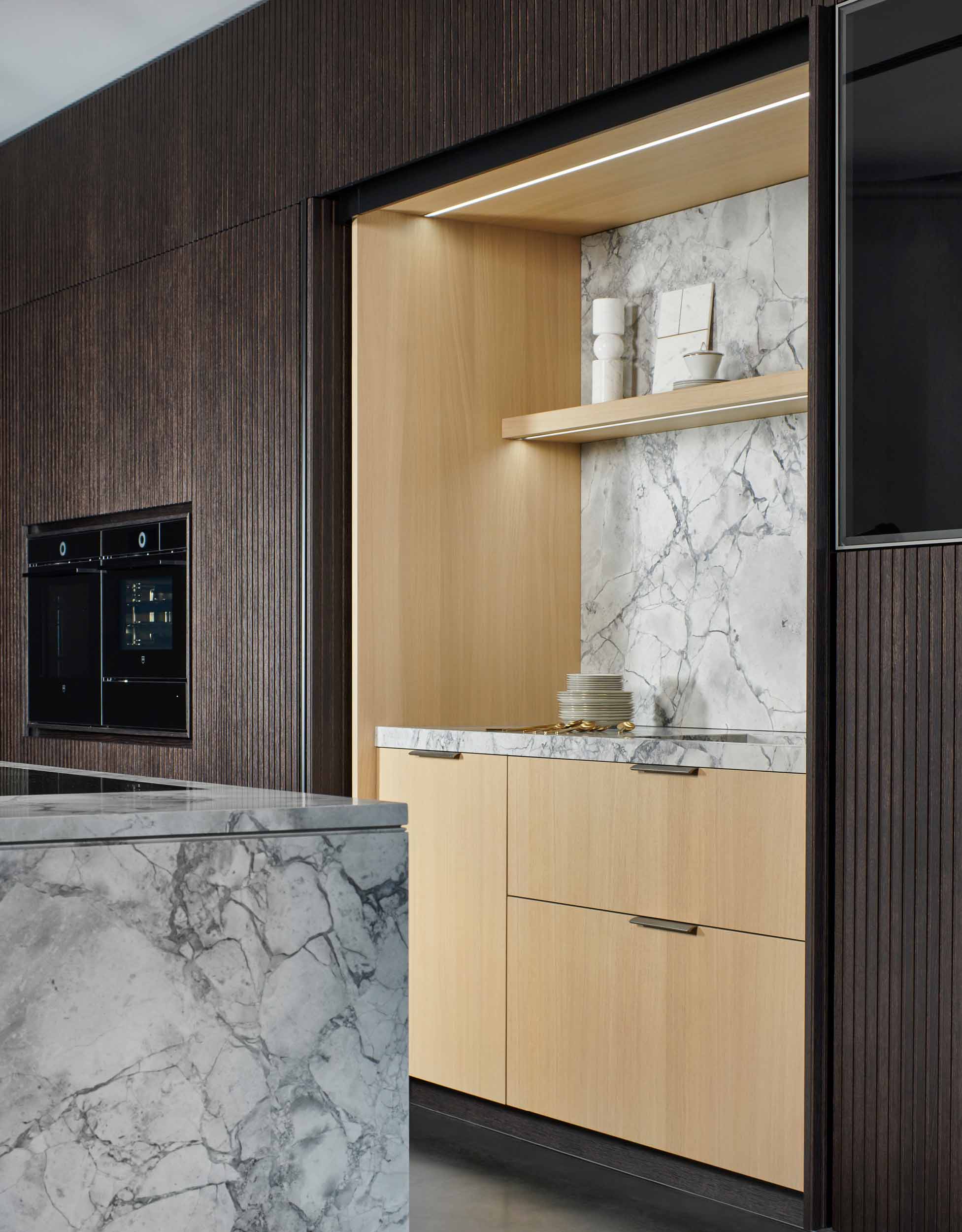
Quooker: boiling water straight from the tap
A Quooker delivers water at 100 degrees at the push of a ring, and with the matching additional unit chilled still and sparkling water as well. What sounds like a gadget changes the daily routine in a kitchen noticeably: the kettle disappears from the worktop, water for pasta is ready at once, and nobody carries crates of bottles up the stairs any more.
weisselberg plans Quooker into kitchens in Hamburg and the surrounding metropolitan region. For us it is not an addition made afterwards but part of the design: the reservoir, the connections and the space in the base unit belong in the drawing from the start, in the same way as the sink, the tap and the waste system. How we work through a project from the first conversation onwards is set out on the page about our kitchen studio in Hamburg.
How a Quooker works
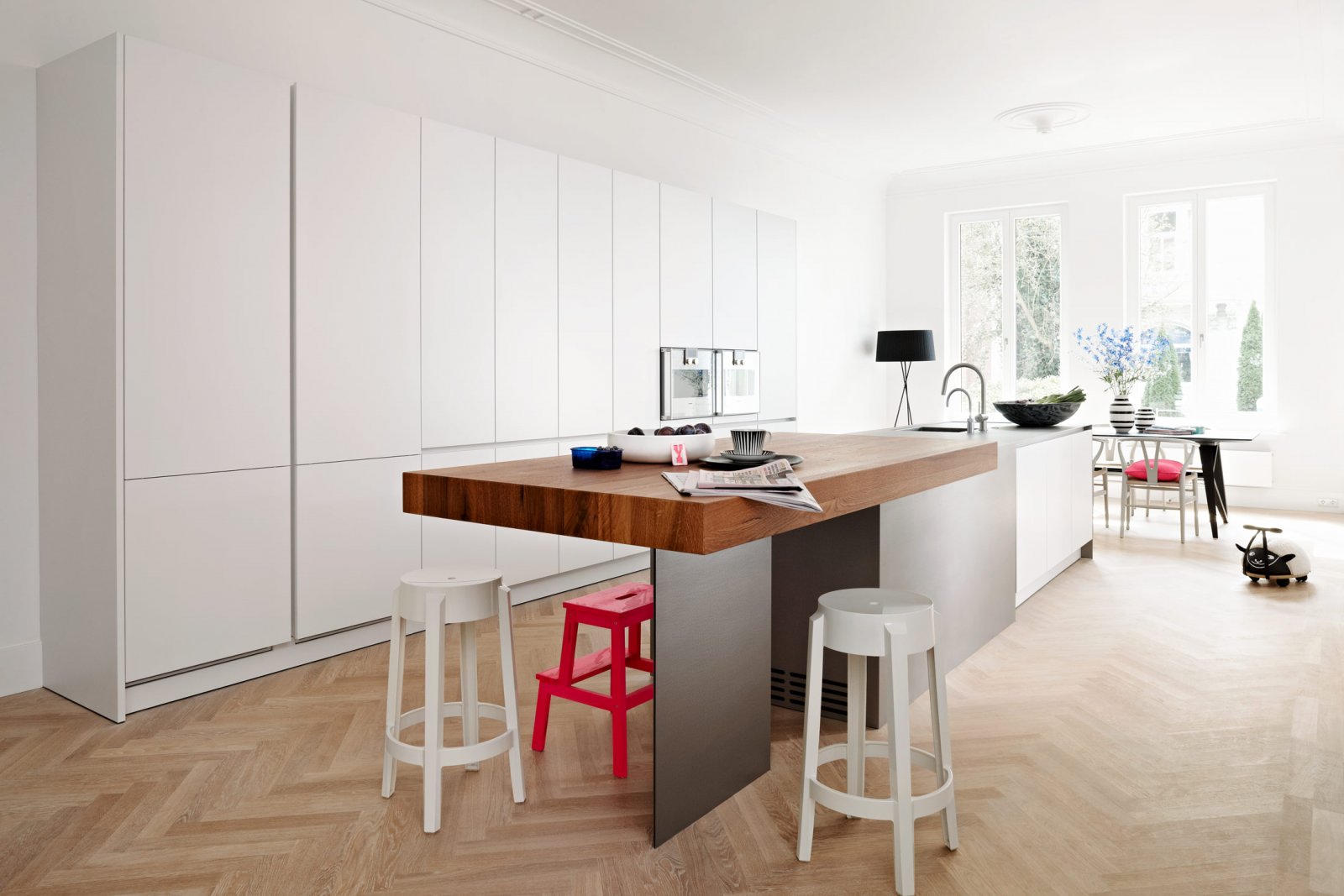
A Quooker consists of two parts. The tap stands on the worktop, and a compact reservoir sits in the base unit below. That reservoir is built like a vacuum flask, with a patented high-vacuum insulation. This is why it holds the water at temperature permanently and needs only around ten watts in standby. When water is drawn off, fresh water flows in and is reheated.
The tap is operated through a ribbed ring. For boiling water you push it twice and then turn, and a red indicator on the tap shows that it is live. Cold and mixed warm water run through the lever as on any other tap. If a CUBE is connected, chilled still and sparkling water come out of the same spout.
The water passes through an activated carbon filter designed for high temperatures. The question people ask most often is whether boiling water on tap is safe, and the answer is in the frequently asked questions further down this page.
The taps at a glance
Quooker offers its taps in several ranges. The Flex has a pull-out hose and is the model sold most often, because it can also be used to rinse the sink down. Fusion and Classic Fusion are the classic all-in-one taps, each available with a round and a square profile, one drawn in a modern hand and the other in a traditional one. On the Front the controls for hot and cold water sit directly at the spout, which makes it particularly comfortable to use.
Anyone who wants to keep an existing mixer tap takes a Nordic as a separate boiling water tap. As a Twintap it comes together with a matching Quooker mixer, so that the two taps read as one picture side by side.
Beyond that there are more than thirty-five design variants, in finishes running from solid stainless steel through black and gunmetal to gold, rose copper and patinated brass. Which finish suits the fronts, the natural stone and the hardware is something we decide together in the design. Which other manufacturers we work with is set out on the page about luxury kitchen brands.
Reservoir and CUBE in the base unit
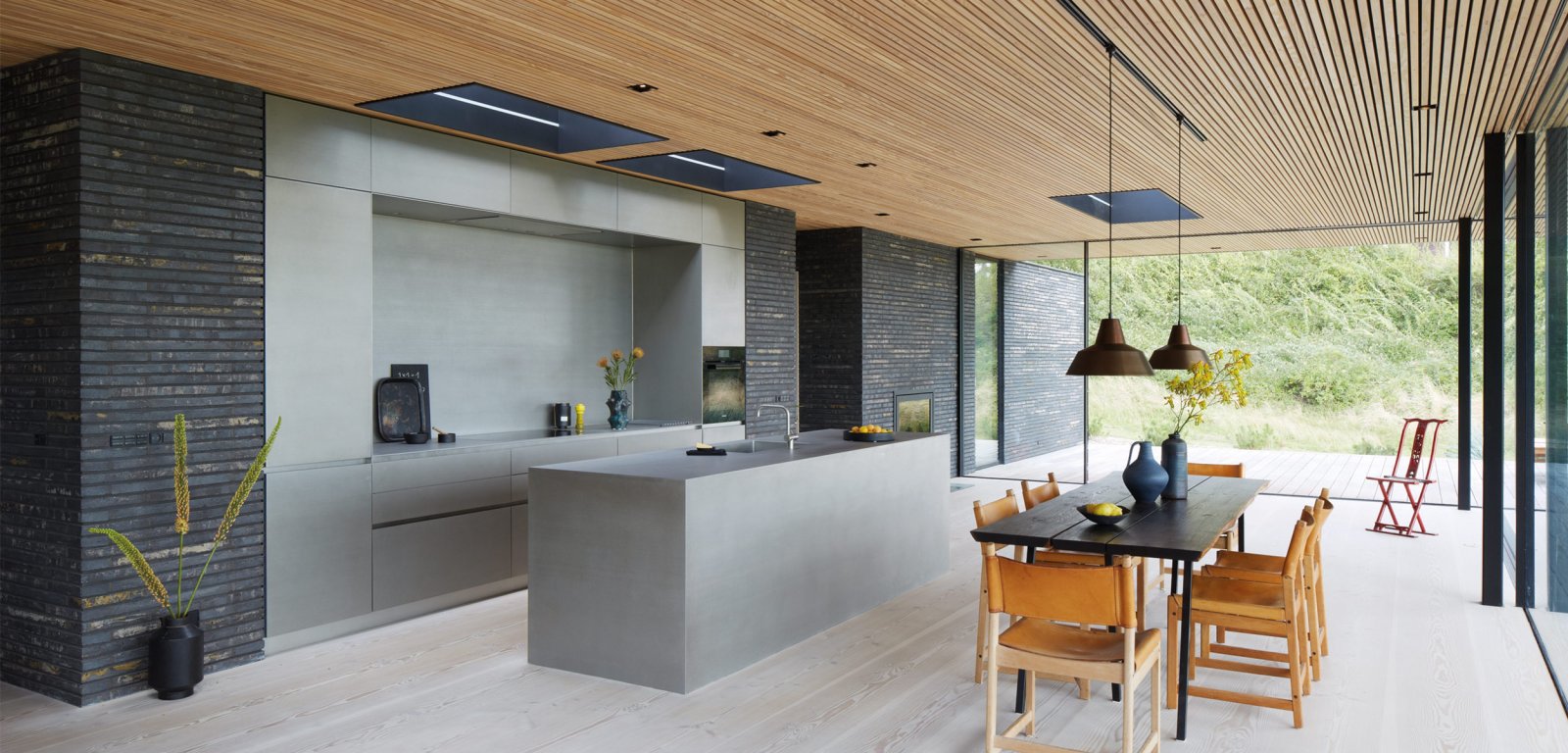
What the tap will be able to do later is decided under the sink. The smallest reservoir, the PRO3, holds three litres of boiling water, measures 153 millimetres in diameter and 467 millimetres in height, and wants 550 millimetres of clear height in the base unit. COMBI and COMBI+ are larger at 200 millimetres in diameter and 580 millimetres of required height, and in return they supply hot water alongside seven litres of boiling water, which means they can replace a boiler or an instantaneous water heater. The COMBI+ also regulates thermostatically and delivers hot water without the usual wait.
Anyone who wants chilled still and sparkling water has the CUBE added to the cabinet as well, either beside or in front of the boiling water reservoir, together with a CO₂ cylinder. That changes what else fits into the unit, so the waste system and the storage often move into the neighbouring element.
Technically a Quooker needs a mains pressure between two and six bar and a socket of its own in the base unit. We check both when we measure on site, before the kitchen goes into production, so that nobody has to improvise later.
How we plan a Quooker into your kitchen
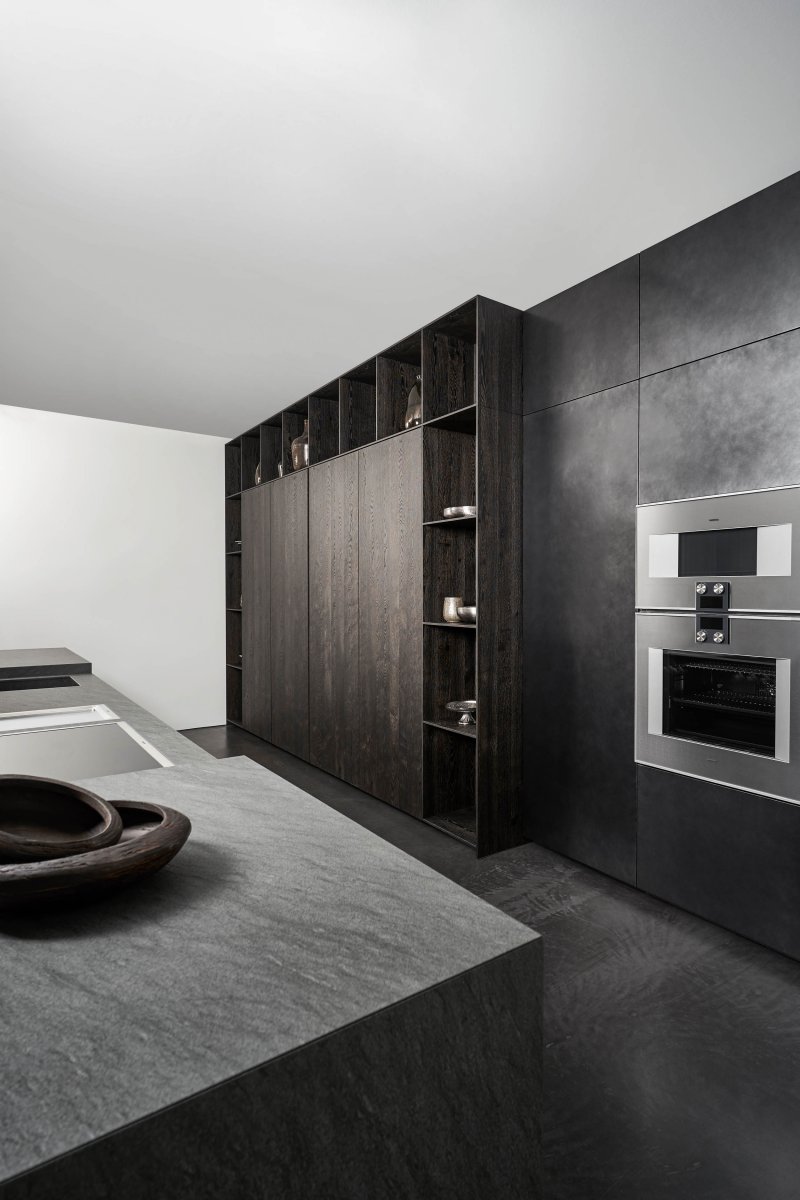
- First conversation: we establish how you cook, whether tea, pasta or sparkling water are part of your day, and which reservoir follows from that.
- Measuring on site: we check the mains pressure, the socket, the waste pipe and the space available in the base unit under the sink.
- Design: the tap, its finish and the sink are settled together with the fronts and the worktop, and the reservoir is given its fixed place in the cabinet.
- Coordination with the trades: we agree the connections with the plumber and the electrician, and in new builds and refurbishments with the architect and the site management as well.
- Installation and handover: our own team builds the kitchen, the Quooker is connected and explained in person. After that we remain your contact for filters and cylinders.
Examples from Hamburg projects can be seen in the project overview.
Frequently asked questions about the Quooker
Is boiling water from a tap safe?
The tap releases boiling water only after the ring has been pushed twice and then turned, and a red indicator shows that it is live. The spout is insulated, and the water comes out as a fine spray rather than as a closed jet. Unlike a kettle, the tap also cannot be knocked over. The Dutch Burns Foundation concluded in 2020 that the risk of scalding is considerably lower than with a kettle.
How much electricity does a Quooker use?
In standby the consumption is around ten watts, because the reservoir is insulated like a vacuum flask. While heating, the PRO3 draws 1,600 watts and the COMBI and COMBI+ 2,200 watts. Heating up takes about ten minutes with the PRO3 and about twenty with the larger reservoirs.
How much space does the reservoir need in the base unit?
The PRO3 measures 153 millimetres in diameter at 467 millimetres in height and wants 550 millimetres of installation height. COMBI and COMBI+ are 200 millimetres across, 472 millimetres high and need 580 millimetres. If a CUBE is added, we plan the base unit larger accordingly or move the waste system and the storage into a neighbouring element.
Which reservoir suits my kitchen?
Where hot water already reaches the kitchen and the point is boiling water, the PRO3 is enough. Where there is no hot water supply, the COMBI takes that task on as well. Where it currently takes a long time for hot water to arrive at the tap, the COMBI+ is the calmer solution. Which one makes sense in a particular case depends on the building services and becomes clear when we measure.
Can a Quooker be fitted into an existing kitchen?
In many cases yes. It requires sufficient space in the base unit, a mains pressure between two and six bar and a socket. Anyone who wants to keep the existing mixer tap takes a Nordic as a separate boiling water tap. Whether your kitchen meets the conditions is something we can see on site.
Does the water taste different?
The water runs through an activated carbon filter designed for high temperatures. In Hamburg and the surrounding region the quality of the tap water is good, and the filter mainly takes out chlorine notes and the substances that carry taste. For the CUBE there is an additional filter, which is changed once a year.
What influences the cost of a Quooker?
Above all the range and the finish of the tap, the choice of reservoir, a CUBE with its cylinders if you want one, and the effort involved in the connections in the base unit. Because these points differ from one kitchen to the next, we calculate individually after measuring and discuss it with you in the consultation. You can arrange an appointment through the contact page.